On 18 November 2020, the UK government set out a “ten point plan” for helping to achieve its goal of net zero greenhouse gas emissions by 2050. Prime Minister Boris Johnson gave his own account of this in an article in the Financial Times. There is clearly much more detail to come from the government in the areas covered by the plan, not least in an imminent Energy White Paper, a Net Zero Strategy and a series of sector or issue-specific strategies signposted in the plan, but we set out here some first thoughts on the agenda that is emerging. We start by focusing on the “ten points” themselves.
1. “The Saudi Arabia of wind”
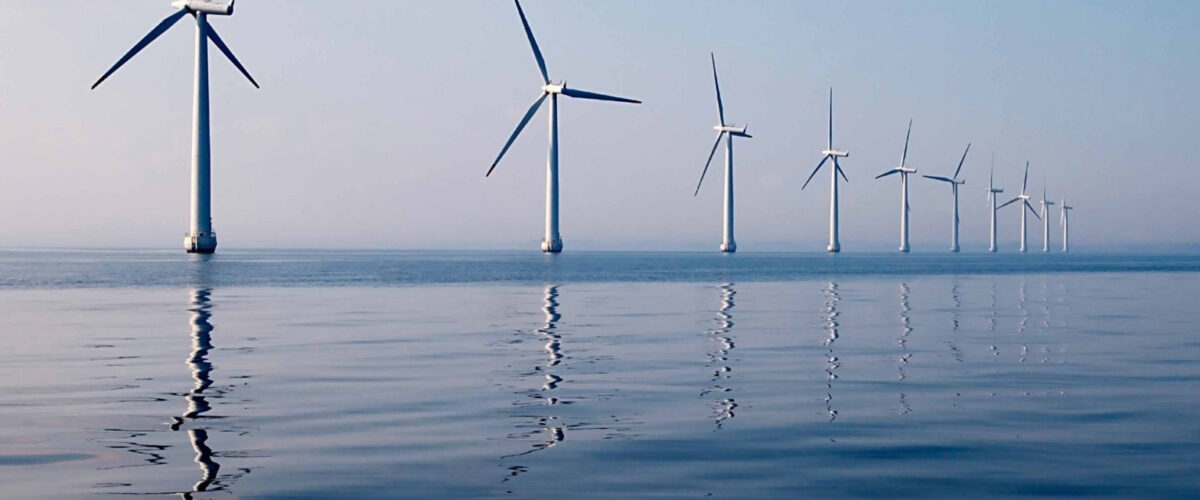
What’s the plan? The aim to have 40GW of UK offshore wind by 2030 goes back at least as far as the Conservative manifesto for last year’s general election. It suggests that the next two to three CfD auctions would need to provide a basis for more than 20GW of new projects between them, which in turn possibly implies that each auction would support about twice as much offshore wind capacity as the 2019 allocation round. Future CfD allocation rounds will feature “more stringent requirements for supply chains” to maximise the UK jobs benefit.
What’s next? The key to achieving these high ambitions will be reducing the costs of existing, fixed-bottom offshore wind technology and rapidly commercialising and scaling up the floating technologies that could expand significantly the range of areas where offshore wind projects can be located: see our new article on this. This will require some changes to the CfD framework (the government’s response to a consultation on these is expected soon). Also important is the BEIS/Ofgem review of offshore transmission: an update on this is promised by the end of the year, and “clarity on an enduring approach in 2021”.
2. “Water into energy”: £500 million for hydrogen
What’s the plan? The UK joins other countries (and the EU) in setting a medium-term target for the production of low carbon hydrogen: in this case, 5GW by 2030, including “a town heated entirely by hydrogen”. So far, low carbon hydrogen has figured in UK government policy mostly as a subset of the proposed development of industrial clusters built around carbon capture and usage/storage (CCUS), with an emphasis on “blue” hydrogen (produced from natural gas, with CCUS), rather than “green” hydrogen (produced by electrolysis of water using renewable electricity). The prominence given to hydrogen in the “ten point plan” and the choice of language are welcome evidence that low carbon hydrogen (of both “colours”) is now being considered as a key area of net zero policy in its own right. The promised £500 million funding appears to be split roughly equally between the supply and demand sides. With a further £4 billion of private investment to 2030, it is anticipated that hydrogen would save almost twice as many greenhouse gas emissions as offshore wind between 2023 and 2032.What’s next? Thegovernment will need to think further about the business models for supporting the first commercial users of low carbon hydrogen and, in the longer term, about how to integrate hydrogen into future green gas support schemes. (The PM envisages a breakfast cooked with hydrogen, but the recent green gas levy consultation made no mention of hydrogen.) Amongst those hoping to fit in on the supply-side of the nascent UK hydrogen economy will, of course, be some of those new offshore wind farms. Green hydrogen
production can help to offset the intermittency of wind power generation and National Grid ESO’s most recent Future Energy Scenarios envisage that, at some point, some offshore wind capacity may not connect to the electricity transmission grid at all, but be focused entirely on hydrogen production. As we have written elsewhere, there are also opportunities for the North Sea oil and gas industries in this area, and some regulatory workstreams that could be started in relation to the blending of hydrogen in the gas grid (it is suggested that blending could reduce the emissions of gas used by up to 7%). Undoubtedly, a comprehensive UK hydrogen strategy (compare the Australian and German ones) would still be desirable, and one is promised for 2021, with business models finalised in 2022. It is hoped that the first GW of production capacity would be commissioned in 2025.
3. New nuclear – all shapes and sizes?
What’s the plan? It is not news that the government is keen to see new nuclear power contribute further to net zero, beyond Hinkley Point C. Another new large nuclear plant (or two), and turning the talk of small and advanced modular reactors into a production line reality, would be welcome from a jobs and a climate policy point of view. £525 million is promised for “large and smaller-scale” plants and for R&D on “new advanced modular reactors”.
What’s next? New technologies will not be ready for deployment for some time. Meanwhile, the government has to decide how to support future nuclear new build: responding to the consultation on a regulated asset base model (from July 2019) would be a good start. In due course, there will be the development consent application for Sizewell C (the “twin” of Hinkley Point C) for ministers to determine. Meanwhile, it will be interesting to see if anything comes of the suggestions that there is renewed interest in taking forward a new project at Wylfa, thought by many to be the best of the sites earmarked for new nuclear a decade ago. The Chinese state-owned nuclear developer also has plans to develop Bradwell, though there has been speculation about the geopolitics surrounding this proposal.
4. Electric vehicles: countdown to 2030
What’s the plan? For some time, it has been clear that the government’s original date of 2040 for an end to the selling of new cars and vans with internal combustion engines was insufficiently ambitious. An earlier date should save money as well as emissions. The date will now be set at 2030 (with a stay of execution for new hybrids until 2035). This is to be facilitated by £1.3 billion to speed up the roll-out of EV charging points; £582 million in grants for buying new EVs; and £500 million for “the development and mass-scale production” of EV batteries.
What’s next? The scaling-up of EVs is a multi-faceted challenge. Vehicle manufacturers and their supply chains will need to make significant investments. Petrol and diesel retailers, and those who finance the purchase of new vehicles, will need to think about developing new products that enable customers to spread the upfront cost of buying an EV over the years of running one with lower fuel costs. The Treasury will need to live with lower tax receipts from fuel duty. Electricity suppliers, local authorities, and car park owners of all sorts, will face new challenges, as well as opportunities to earn new revenues from charging EVs. Ofgem will need to think carefully about how much distribution network operators should be allowed to spend in anticipation of mass EV ownership in setting their price control for 2023-2028. And that all assumes that “EV” in this context means vehicles powered by batteries, not by hydrogen fuel cells: but if low carbon hydrogen production takes off, fuel cells may make a comeback, introducing a further element of choice and complexity. In any event, hydrogen is likely to be part of the solution to low carbon HGVs, on which a consultation is promised.
5. “Cleaner public transport”
What’s the plan? Building on “£4.2 billion in city public transport and £5 billion on buses, cycling and walking, as announced by the Prime Minister in February”, there will be “tens of billions of pounds” invested in “enhancements and renewals of the rail network” – a figure that would be significant if it does not include any of the costs of HS2. Electrification of railway lines is explicitly mentioned: it is interesting that hydrogen (an alternative mode of decarbonisation to electrification of lines) is not mentioned in connection with trains.
What’s next? It ought to be easier to convert public transport, in the form of buses and trains, to low carbon fuel than it is to change the behaviour of millions of individual car owners. Moreover, this would help with the meeting of air quality standards. In practice, rail industry organisation and funding, in particular, were already challenging areas of policy before COVID-19 cast doubt on so many existing assumptions about their business models. However, there is no shortage of good ideas, and – other things being equal – public transport is one of the cheapest industries to convert to hydrogen use. For 2021, “the first-ever National Bus Strategy” is promised, and there is also a less specific commitment to improved rail links around “regional cities”. When it comes to cycling, at least, changes in behaviour during the time of COVID-19 may help to hit the target of doubling cycling rates from 2013 levels by 2025.
6. “Jet zero and green ships”
What’s the plan? Greenhouse gas emissions from international aviation and shipping involving UK ports and airports are not currently included in the net carbon account, on the basis of which the UK’s progress towards its 2050 target is assessed – although the Committee on Climate Change has recommended that they should be. Nevertheless, they need to be addressed and, if efforts by others, including the IMO in relation to shipping, bear fruit, there will be significant opportunities for those able to supply the new fuels, ships and planes. For now, the public money going into this area seems to be relatively small amounts of research funding, rather than the £hundreds of millions or £billions seen elsewhere.
What’s next? The government set up a Jet Zero Council in July 2020. There are many promising developers of synthetic fuels that offer the prospect of aviation with fewer carbon emissions; and there is increasing interest in various alternatives to existing marine bunkers. Hydrogen and CCUS policy are likely to be key enablers of progress in this area, and it is also anticipated that “high-grade heat” from advanced modular nuclear reactors could “unlock efficient production of synthetic fuels” (and hydrogen). For 2021, consultation on an Aviation Decarbonisation Strategy and a consultation on a sustainable aviation fuels mandate (possibly to commence in 2025) are promised. These are, of course, areas where the nature of the industries mean that there are limits to what any one country can achieve on its own.
7. “Greener buildings” (£1 billion in 2021)
What’s the plan? Making buildings more energy-efficientis not particularly “exciting”, but it is a hugely important part of net zero. In particular, it makes it easier to achieve the decarbonisation of heating (because you will need less heat, low carbon or otherwise) and reduces fuel poverty. Yet it is an area where previous governments have struggled either to find ways of incentivising landlords and homeowners to take retrofitting action, or to set the bar high enough for new buildings. Set alongside a promise of £9.2 billion for energy efficiency in the last Conservative manifesto, £1 billion in 2021 looks useful rather than game-changing. Decarbonising the supply of heat is also complex: a shift from gas to hydrogen would probably involve the least inconvenience for consumers, but is some way from being
practicable. Take-up of the alternative (heat pumps) remains sluggish, but ambition is high, with a target of 600,000 per year by 2028. This is a staggering figure: it is more than 22 times the UK’s 2018 total of 27,000 installations and would be more than double what France, the current leader in European installations with very similar population size, achieved in the same year. There is no mention of additional support for the “low-hanging fruit” of low carbon heat networks, although this is an area where some progress has been made in recent years. Of all the areas on which the “ten point plan” puts a figure in terms of contribution to reducing emissions in 2023-2032, “greener buildings” scores highest (more than three times the impact of offshore wind and almost double that of hydrogen).
What’s next? In terms of “carrots” for homeowners, the government’s latest idea is the green homes grant: it is still too early to tell whether consumers and installing businesses will take full advantage of it, but it is being extended for another year. On the “stick” front, we await the outcomes of consultations on the Future Homes Standard (a consultation on an equivalent for non-domestic buildings is now promised) and a further proposed tightening of the minimum energy efficiency standards (MEES) for private rented accommodation. This is also an area where – particularly in the industrial and commercial sector – there is scope for innovative offerings from landlords and others who are prepared to invest in new technology or enter into new forms of energy efficiency as a service (EEaS) contracts. A Heat and Buildings Strategy is promised for 2021, as well as a “world class energy related products policy framework”. It will be interesting to see whether “[going] with the grain of consumer habits, [to] improve energy efficiency standards of household products” will mean setting standards that are more demanding than those set out under EU product requirements legislation, or just tracking any improvements at EU level that will no longer apply automatically in the UK after Brexit.
8. CCUS for all GB
What’s the plan? CCUS is now widely seen as pivotal to net zero ambitions. The UK has been trying to become a world leader in this area for some time, most recently by planning to support a number of CCUS industrial clusters (see our articles here and here). New elements in the “ten point plan” are a quantitative target (10MT of CO2 stored by 2030 – “equivalent to all emissions of the industrial Humber today”); an additional £200 million of (capital) funding to add to the £800 million committed by the Chancellor in the March 2020 Budget; a doubling in the ambition for the number of clusters to be established by the mid-2020s and 2030; and a new brand name for the clusters, which are now to be designated as “SuperPlaces”. We have written separately on the implications of the “ten point plan” for CCUS here.
What’s next? Following a series of policy documents issued in August 2020, government decisions are expected on a range of details of the business models proposed for the different “links” in the CCUS value chain over the coming months. It should not be long before the government invites formal bids or expressions of interest from potential clusters. We have been following policy in this area extremely closely and advised the government on a previous attempt to commercialise CCS. Please get in touch if you have any questions.
9. Nature
What’s the plan? The “ten point plan” repeats recent announcements about the UK government’s goal of increasing to 30% the proportion of the UK covered by conservation designations; funding for “landscape recovery” projects; and investing in flood defences. What’s next? There is little in the plan about future policy development in these areas. The implementation of the Agriculture Act 2020 and the Environment Bill will play a key part. An
England Tree Strategy is promised, setting out how the Conservative manifesto commitment to plant 30,000 hectares per year will be met. There will also be a Nature Strategy.
10. Financial infrastructure
What’s the plan? Following on from earlier commitments to increase UK public spending on R&D and the publication of an R&D roadmap in July 2020, and funding for specific projects such as the STEP fusion project, the government will launch a £1 billion Net Zero Innovation Portfolio. This will focus on priority areas corresponding to the “ten point plan”: floating offshore wind; nuclear advanced modular reactors; energy storage and flexibility; bioenergy; hydrogen; homes; direct air capture and CCUS; industrial fuel switching; and “disruptive technologies such as artificial intelligence for energy”.
What’s next? The UK plans to issue its first Sovereign Green Bond in 2021, “subject to market conditions”, and to introduce mandatory reporting of climate-related financial information across the economy – starting in 2023 and reaching full coverage in 2025. A “green taxonomy that defines which economic activities tackle climate change and environmental degradation” will “better guide investors”. In the short term, the government must choose between the two versions of carbon pricing that it could deploy to replace the EU Emissions Trading System from 1 January 2021 (a UK ETS or a carbon emissions tax). The outcome of Treasury’s Net Zero Review, considering “the choices across our tax, spend, regulatory and other levers to maximise growth opportunities and ensure an equitable balance of contributions across society” will be important in the longer term.
“Create jobs and preserve our lifestyles“
Like governments around the world, the UK government is keen to make the most of a “green recovery” from the economic turmoil caused by COVID-19. Since the “ten point plan” is as much a piece of industrial strategy as it is of energy and climate policy, it frequently reinforces the message that embracing the opportunities of net zero policies can, like the Treasury’s Freeports policy, help to “level up” areas of the country which helped the current government to its majority in the 2019 general election. Some early comments have characterised it as “more of a vision than a plan”. If so, it is a vision of a remarkably frictionless transition to net zero where nobody has to pay more for their energy; change their holiday travel habits post-pandemic; consume less red meat and dairy products; or otherwise change their behaviour (apart, perhaps, from a few of the less enthusiastic cyclists and walkers among us). One might almost caricature it as suggesting that, with a small amount of seed funding from the government, amazing new technologies will solve all our problems.
Challenges ahead
The Climate Change Act 2008 established a system of five-yearly carbon budgets to map out the trajectory of greenhouse gas emissions reductions to 2050. So far, the UK has beaten the targets set for the first two budget periods and will probably beat the target for the third (2018-2022). Beyond that, it was already not on track for the fourth and fifth budget periods when the 2050 target was only for an 80%, rather than (as now) a 100% reduction from 1990 emissions levels. It is not claimed, nor is it likely to be the case, that the measures outlined in the “ten point plan” will, by themselves, close these gaps. The setting of the sixth carbon budget (for 2033-2037) is another task awaiting ministers in 2021. At a global level, it has been estimated that, on current trends, humanity will burn through the carbon budget that stands between us and dangerous climate change by 2030. There is nothing wrong with painting an attractive picture and leaving the “how” for future publications, as long as the working-out of a roadmap proceeds with a sense of urgency, a commitment to net zero objectives across government, and a willingness to make tough decisions. In the run-up to the UNFCCC CoP26 conference in Glasgow, the eyes of the world will be on UK climate and energy policy. Whilst the political heft behind the “ten point plan” is welcome, it will be the grinding detail of regulatory activity away from the limelight that will determine whether the vision becomes reality.
Subscribe and stay updated
Receive our latest blog posts by email.