
On 5 February 2019, Dentons held its
fourth annual workshop on investing in European renewables. Here we outline
some of the key messages that emerged.
Setting the scene
At first glance, these should be happy
days for the European renewables sector. Energy from renewable sources (RES) is
firmly established in the mainstream of the power industry. Installation costs
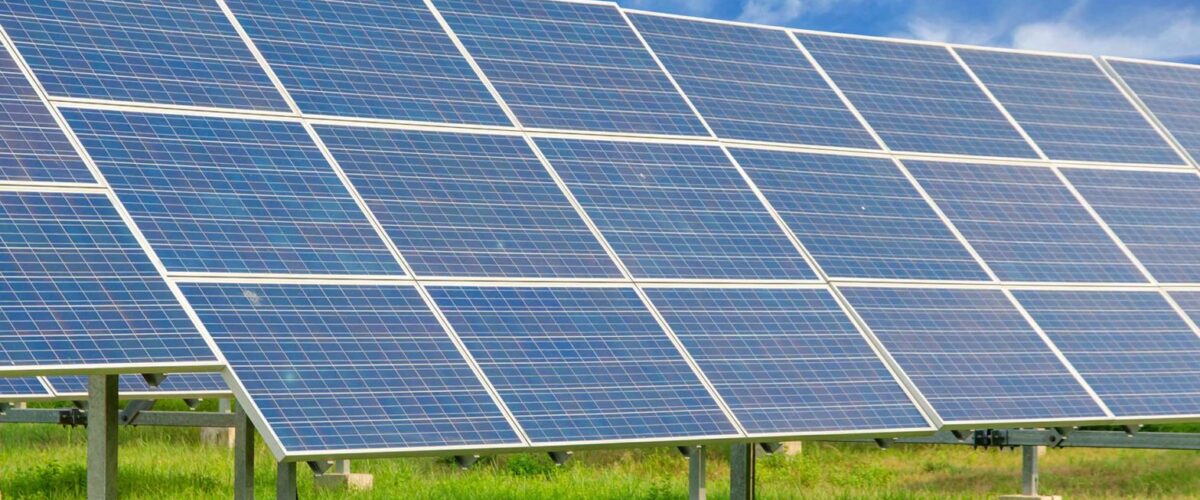
for wind and solar continue to drop: having fallen already by 75 percent in
2010-2017, PV costs are projected to fall by more than half again in 2015-2025.
Mindful of their international and in some cases also their domestic
commitments, governments have been setting some ambitious renewables targets
for 2030 and beyond. Even the IEA, once a notably sceptical voice on
renewables, has predicted that wind will be the largest source for power
generation in Europe by 2027.
But of course life is never that simple.
The days when the industry could sustain strong growth in revenues and
profitability just by chasing the fattest feed-in tariffs, surfing the waves of
subsidy as they washed across Europe, are long past. With maturity, the sector
faces more complex problems. It must grapple with the fundamentals of commodity
markets; sell itself to new classes of customers and investors; and work with
governments, regulators and system operators to exploit the new technologies
that can make whole power systems work in more sustainable and efficient ways.
And whilst the broad outlines of the next stages in the energy transition are
widely accepted, the details of how best to achieve it remain a matter of
debate.
Country snapshots
No two jurisdictions in Europe present
the sector with quite the same opportunities or challenges. Dentons lawyers
gave brief sketches of the renewables sectors in their home markets, covering
12 of the 20 countries featured in Investing
in renewable energy projects in Europe – Dentons’ Guide 2019. We
summarise below the key talking points from their presentations (the slides
from which can be accessed here).
Germany produced more electricity from renewables than from coal for the
first time in 2018. The growth in RES capacity may not be so large in 2019, but
if buildout rates are slowing down a little, the Energiewende overall is changing gear rather than coming to a halt.
The new financial support mechanisms are functioning well. The recently
announced conclusions of the German government’s Coal Commission
point the way to a complete phase-out of coal-fired generation. The publication
of an action plan for grid expansion further indicates the German
government’s continuing commitment to taking the energy transition into its
next phase, and interest is strong from other sectors of industry, as the
activities of German companies in the e-mobility and hydrogen sectors show.
In France,
the government plans to more than double wind and solar capacity by 2023, with
a further doubling of solar and 50 percent expansion of wind in the following
five years to 2028. Auction mechanisms have succeeded in bringing down the
price of supporting RES. Procedural changes should reduce the potential for
objectors to delay projects. At the same time, it is worth remembering that the
initial trigger for the gilets jaunes
protests was an increase in carbon taxes: in France as elsewhere, there is an
inevitable tension between the need to adopt policies to avert the “end of
the world” and the need of ordinary citizens to survive financially until
the “end of the month”.
The market fundamentals for the RES
sector in Turkey remain strong –
notably, growing demand for power and a strong government commitment to
reducing dependence on imported fuel. At
present, the regulatory regime favours either very large (1 GW+) or quite small
(up to 1 MW) projects. For the latter,
there is a feed-in tariff / premium support mechanism; for the former, support
is based on auctions. It is unfortunate that two of these were cancelled in
2018 – one of which would have included the country’s first offshore wind
project – but it is hoped that these will be reinstated.
In Poland,
2019 should be a very busy year for RES projects, as the government focuses on
meeting its 2020 RES targets. After a period in which various measures were
taken to discourage onshore wind, auctions will be focused on solar and onshore
wind. As in many markets, the longer term future depends on electricity market
reform to integrate large amounts of intermittent renewable power.
Italy has set itself ambitious plans for increasing its share of RES to
2030, focused on wind and solar. At present, it is a little less clear how
these will be supported in terms of any public subsidy. On the other hand, the
secondary market remains active, and Italy is one of the jurisdictions where
there is considerable excitement around the prospect of subsidy-free
developments, possibly financed in part by arrangements with non-utility
industrial offtakers (corporate PPAs).
The Czech
Republic and Slovakia
demonstrate some of the same features as the Italian market, in slightly more
extreme form. The boom years were some time ago, and for the moment, these
jurisdictions present secondary market, rather than development opportunities.
As in Italy and some other jurisdictions, the authorities are now investigating
whether the subsidies of some existing projects were properly awarded – did
they, for example, commission exactly when they claim to have commissioned?
Careful due diligence is therefore required when assessing acquisition
opportunities.
In the UK, the renewables industry faces some challenges as a result of
Brexit, particular if the UK leaves the EU with no deal. However, the
government has recently committed to continue to hold subsidy auctions with a
focus on offshore wind every two years, and – with a third of UK power already
coming from RES – it is starting to address the decarbonisation of the heat and
transport sectors. For those technologies without the prospect of new regulated
support (solar and onshore wind), apart from a proposed new “smart export
guarantee” for sub-5 MW projects, the position is starting to improve as
steps are taken to make grid charging rules work better for storage and
progress is made towards developing corporate PPA models that work in a
subsidy-free market.
In the Netherlands, the government continues to contest the case brought
by the Urgenda Foundation and others (and now twice upheld by the Dutch
courts), that it is legally obliged to reduce greenhouse gas emissions by 25
percent against a 1990 baseline by 2020. But it has in any event allocated
generous subsidies to RES, including €10 billion under the SDE+ regime this
year. As in the UK and Germany, offshore wind is set to grow strongly in the
next few years.
Spain is another jurisdiction where interest in corporate PPAs is high,
particularly among projects that have not secured support in the auction-based
regime that began to operate in 2017. Some projects that did secure such
support face a challenge to meet their commissioning deadlines. For those with
deep pockets, there are opportunities to secure grid capacity where earlier
developers’ rights have expired. There are separate incentives for
self-consumption and projects in the Spanish islands.
For the renewables industry in Russia, progress has been slow for many
years. Local content requirements and a bureaucratic, highly centralised power
regime, have not helped, and the method of procuring RES power, being based on
capacity and capital expendture, also sets it apart from other jurisdictions.
But there are signs that the pace is starting to pick up. There are good
prospects for self-consumption projects up to 25 MW, and for the energy from
waste sector.
The renewables sector in Ukraine continues to attract
international investment, driven by attractive feed-in tariffs and exemptions
from import VAT. This looks set to continue under the new auction-based support
regime that will take effect from 2020, but the industry’s resources will be
stretched to meet the end-of-2019 deadline for projects to be eligible for
subsidies under the old regime.
Alongside our own colleagues, industry
stakeholders contributed insights in keynote speeches and a panel discussion
(the slides from the keynote speeches can be accessed here
and here).
Conclusions
The broad, long-term direction for the
renewables industry appears to be set, and in the right direction. As always,
stability of regulation will be an important factor in realising the sector’s
potential. But increasingly, its success will depend on the development of new
investment approaches – not only to RES projects themselves, but to the
development of the grid and of technology to make it work more efficiently,
harnessing the power of big data, and facilitating new market models.
If you would like to discuss any of the issues raised in this post, or any other aspect of European renewables, please get in touch with any of the lawyers listed in our guide, or your usual Dentons contact.
Subscribe and stay updated
Receive our latest blog posts by email.